
The soccer world cup this year was a grand spectacle – the fanatical fans, the determined players, the referees with their little cans of shaving cream (or that’s how it looked – what was that stuff in any case?), but especially, the performances that the coaches put up in their little demarcated boxes next to the field. Some of them are more entertaining than the players, screaming and ranting to players and referees. And they get paid well for standing there, I thought, because how difficult can it be to coach a soccer team?
Well, I started to pay a little closer attention to the coaches and read up a little, and I was quite impressed with what I found. It’s true that it is easy to coach, you basically just need to get 3 things right – play a game, watch what happens and give feedback to the players so they don’t do the stupid things again. You and I could also do that, its true, but I found that these coaches not only do these things but they get it perfectly perfectly. Take the watching-the-game bit.
This is Louis van Gaal, the previous Dutch coach and current Manchester United coach, sitting on his bench (on the right of the photo) with his notepad on his knees. That notepad just gets my attention, it’s saying that the coach is watching with the intent to remember, with the intent to improve some aspect of the game afterwards. It tells you something about being disciplined, about focussing on every detail, on making sure NOTHING is forgotten. See how his support staff also sits with pads on their knees?
Obviously he expects that approach from everyone, but there is something else about this picture that will get the attention of soccer fans – he is sitting down. That is not such a common practice for soccer coaches, they tend to jump up and scream instructions regularly during a game. Does this mean that he is doing something wrong?
I don’t think so, and here’s my reason: Imagine you are the coach in that little box and you are screaming like a teenager because your players have the ball and they are about to score a goal. You are furiously urging them on, as is your habit, but they miss and you grab your head and fall down on the ground. What do you expect from this observation afterwards when you have to give feedback to the players? Were you able to see everything that happened? Is it possible for you to evaluate the situation objectively, identifying that the wing was a little out of position and a little late with his pass, that the player next to the one with the ball hanged back instead of pushing forward which would have split the attention of the defender, which would have given him a clear path to the goal? That type of detail analysis is very difficult to achieve when the moment is filled with pure emotion. It is well known principle from the Care and Growth programme: For the coach to be able to watch the game and SEE, he must be present. To be present in this case means to have sufficient perspective to be able to see the contribution that every team member is making. If your aim is winning at all costs, your eye is following the ball. If your aim is developing the players, you watch all the players.
Look at the coaches of the final four teams in this year’s tournament, they come from very different backgrounds and have different styles, but it is telling that they all seem to be quiet observers next to the pitch.
Alejandro Sabella, the manager of Argentina’s national side who managed to reach the finals in the 2014 world cup:

Luiz Filippe Scolari, manager of the Brazilian national team who managed to reach the semi-finals of the 2014 world cup:

Joachim Low, manger of the German national team who won the 2014 world cup:

There was one moment in that famous match against Brazil where Germany had already scored a few goals, and Joachim was giving instructions to a replacement player when one of the staff tapped him on the shoulder to say that the team has just scored another goal. His focus was so much on whether players were acting according to the plan that he didn’t notice that a goal was scored. I’m not saying that these coaches are more relaxed than your average coach – they seem to be as intense as the next guy, but their focus is on players and not goals. Come to think of it, all four of them are less likely than your average coach to scream at their players while they are on the field. They seem to have an understanding of the fact that it is too late to coach them now, they are doing what I coached them to do before the match, and if its not working out I made a mistake somewhere, either in the conditioning of the players or in the expectation of what the opposition will do.
Of course, this principle of emotional involvement that impacts on what we see is actually supported by science. It is a proven fact that our emotions distort our perceptions. If you are scared of snakes, a little wavy line in the paving will look like a snake for you. But more than that, it is proven that fear narrows our attention to what is exactly in front of us. Maybe this is the reason why these soccer coaches make such impressive individuals – in the face of immense pressure, the public that so shamelessly demand victory, the knowledge that your continued employment depends on that elusive goal, they are not focussing on a goal but deliberately take their attention elsewhere. It takes real courage and discipline to do that. After that historical semi-final match between Brazil and Germany, the Brazilian coach, Scolari walked across the pitch to his players and consoled them one by one. It would have been only human to see him lose his temper, to see him scold players who were not doing what they were supposed to be doing, but he understood that what was required now was to console them. Even after the match at the press conference he was careful about blaming any players – that is where a good coach shows his mettle.
In fact, these coaches all view the score line as a fairly inaccurate measure of success. Louis van Gaal can get so irritated at a press conference if a journalist states that they had a bad game because they lost, because he says he judges the players on how they played, and it is possible to have a good game and lose because of a moment of individual brilliance. Afterwards he judges the players on whether they played according to their potential, according to the plan. It is about more than winning – it is about the players. Poor Scolari lost his job after Germany defeated Brazil in such spectacular fashion, and yet, do you know that Scolari coached Brazil to world cup victory before? Is the score line from that match really a fair reflection of his qualities as a coach?
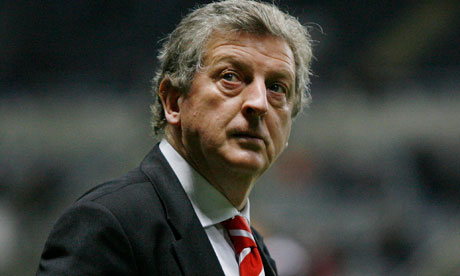
Roy Hodgson was the English coach in this world cup. He actually started out his career in Sweden, coaching one of their clubs to a record breaking winning season. He was called to an interview soon after that for the job of the national coach of Sweden, and when he sat down for the interview he asked whether he was called for the interview because his results are so good, because if he was there because of his results he is leaving now. The person interviewing him was a bit surprised, and showed him a piece of paper with a list of all the qualities they were looking for in a coach, and said there are 4 candidates still coming, and the one that best match this list will be selected. That persuaded Roy to take the job. That is how careful these coaches are of judging someone on results alone.
Now I bet you are nodding your head wisely and you just know that you are not one of those guys who judges on outcomes alone, no sir, I look at how they play the game. Really? Lets pretend that you are the President of your country’s soccer federation, and you have to appoint a new coach. The first candidate that sits down in front of you hands you his cv, a little apologetically, because it’s not really stirring stuff: He played with great skill for his national team as a young soccer player, then started his coaching career by coaching a fairly small club to success in a third-rate league, thereafter being fired twice before ending up on your doorstep because the last club he worked for went bankrupt. So technically he avoided being fired the third time by getting retrenched. Would you consider this guy?
Well, you might be surprised to know that Jürgen Klinsman did exactly that – he appointed Joachim Löw as his deputy coach first, and thereafter as the head coach when he stepped down himself, not because of his record of scoring goals (or not scoring them in this case) but simply because Joachim had a vision that Klinsman found very appealing – he wanted to make German soccer a quicker game and develop the players so that every player on the field is confident with the ball at his feet. And he said it will take a national, single focus on a coaching strategy that runs over a number of years, he cannot do it alone, and it will take years, not months. When we saw Germany in this world cup we saw the result of this strategy being implemented more than 10 years ago, and I’m not referring specifically to Germany lifting the world cup, but to the way they played every game, to the way they managed to get relatively unknown and young players to perform far above expectations. Do you see the way Klinsman was focussing on strategy, stability and ability, and not winning?
Then we get to another important part of the coaching cycle – feedback to the players after the game. If you think they get together in the locker room for a quick chat afterwards and that is that, you are very wrong. Van Gaal is quite open about how he handles feedback to players: Every player is assessed, psychologically, to determine how feedback should be given to him in order for him to be open and susceptible for suggestions. Players are then colour coded according to these assessments so that it is easier for van Gaal to remember how to deal with each individual, and the personal video feedback scenes are selected based on which ones will work better for his personality type, but not only that, van Gaal even changes the pitch of his voice when he gives feedback for certain personality types. They go all out to ensure a player understands EXACTLY what they are saying to him.
Do you notice that you didn’t read anywhere that van Gaal said “he is being paid a lot of money to play so he better play well or I’ll get rid of him”? And yet, in everyday life, when a manager feels the pressure it is just too easy to pull your head back into your shell of defences and declare that they know what to do and they better do it. Obviously van Gaal expects discipline, and he is prepared to fire a player, but not before he has tried everything in his arsenal to get that player to perform. These coaches understand when to hold a player accountable, and when more coaching is required.
There is another aspect of the feedback that is quite interesting – when these players have had their feedback and they know what they should improve, training starts. Some coaches spend a lot of time in front of the white board drawing pictures of attacking circles and little stick men running around, but these four coaches all share an “old-school” approach in this respect. They get on the pitch, practise the drill, physically move the player where they want him to be and repeat until all players get it 100% right, to the point where the players sometimes complain that they are being treated like children. They understand that the body needs to perform this drill, not the mind, and that repetition breeds skill and confidence. When we deal with people in the office you might be lulled into thinking that we don’t run around on a pitch and therefore don’t need to practice for anything because our bodies are not really part of the process. But try to remember how it felt when you did your first performance counselling or disciplinary case with a subordinate. Its only the bravest amongst us who would be able to say that they didn’t experience some level of anxiety and perhaps some brain freeze during the event. It is because it is all fine on paper to explain how to confront a person who is performing poorly, but when you are looking the person in the eye the stress of the encounter may make you forget everything you were supposed to say. It is a task that requires a certain measure of skill, therefor coaching is appropriate.
What is required from managers is very simply identical from what is required from a soccer coach – focus on employees, not results. Don’t think for a moment that we are saying a manager can relax and just let things go, quite the opposite, the successful manager will pay meticulous attention to what his subordinates are doing in a way that shows energy, personal discipline and courage. One of Joachim Löw’s players once said in an interview that they are so well prepared for a match that they sometimes know better what the other team are about to do than the poor team themselves. Are your employees in that place? Do you have employees who expresses their gratitude because they have a manager who sees problems coming long before they happen, and meticulously and with great zeal prepare them for that moment? Do you have the discipline to sit down and do a proper, in-depth review of a maintenance shut down after the event with the intention of learning as much as you can and preparing employees better for the next one?
It takes real courage to look at the world of work with the intention to see the world for what it is, because we have to be honest about the role we play in that world. If you feel some doubt perhaps there are doubt, perhaps it was the coach who made the mistake and not the player. If you are honest you will be more accurate in your assessments, if you are more accurate, players (and employees) get better feedback, and better feedback helps to improve skills. Simple as that.
Comments
2 responses to “The Coaching Game”
Interesting article yet a little to simplistic in approach with main observation on competition day , what about the weeks a months preparing and learning the personas of each player etc..weeding out the players who do not set with the plan and others who are disruptive etc etc , what about the years of sitting, test,correcting and adapting game plans and much much more ..
I think this article is compiled by a Non coach with way to many assumptions and to “little meat to the bone” info.NB not believing in coaching does not make it so.
I Also see this article trying to line corporate management with coaching? Perhaps project management skills would be better as results are always a massive deciding factor in sport..management within a corporate has many roll players and other requirements coaching is a little more specific with less emotion and more results.
The intent of the article is to consider the coaching principles of the world of professional sports in order to apply it to the corporate world.
These overlapping principles are indeed presented simplistically, but with the hope that the corporate coach could find some inspiration from it. Obviously, an assumption is made that we all consider coaching an important aspect of management, or the corporate world, and I believe this to be true.
I also consider coaching to be in important aspect of project management skills, because in reality “project management” and “management” as concepts are joined at the hips and suffer the same challenges. The way we view results is an essential component of this article, regardless of whether it is the corporate world or a sports team we are referring to. Your main purpose as a coach is the player, not the results of the match. It is certainly a principle that is transferable to the corporate world, and one which can change the world for that matter.